No more loud visibility: how VC communication is changing
Reading Edelman’s 2026 report, I kept thinking: this is exactly what I’ve been seeing in Europe's VC communication. So I decided to take a closer look.

Hi — here is your morning read.
*Who Owns Culture is a newsletter about how technology and capital shape culture, status, and the world we live in. Grab coffee and *subscribe to explore the answers.
Global communications firm Edelman recently published its Perspective on 2026, capturing shifts in how people behave. It describes “tipping points” that are essentially social reactions and preferences you can already feel in the air. Reading it, I kept thinking: they are exactly what I’ve been seeing in Europe’s VC communication.
To be clear, I’m not working inside a fund but at the intersection of journalism and marketing across the VC ecosystem. I read dozens of emails and press releases every day, LinkedIn is basically my daily briefing, and I talk to insiders constantly — which, I guess, gives me a certain advantage: I get to see communication patterns from different angles.
So I decided to take a closer look at how investors actually communicate today — and how much of it aligns with broader trends.
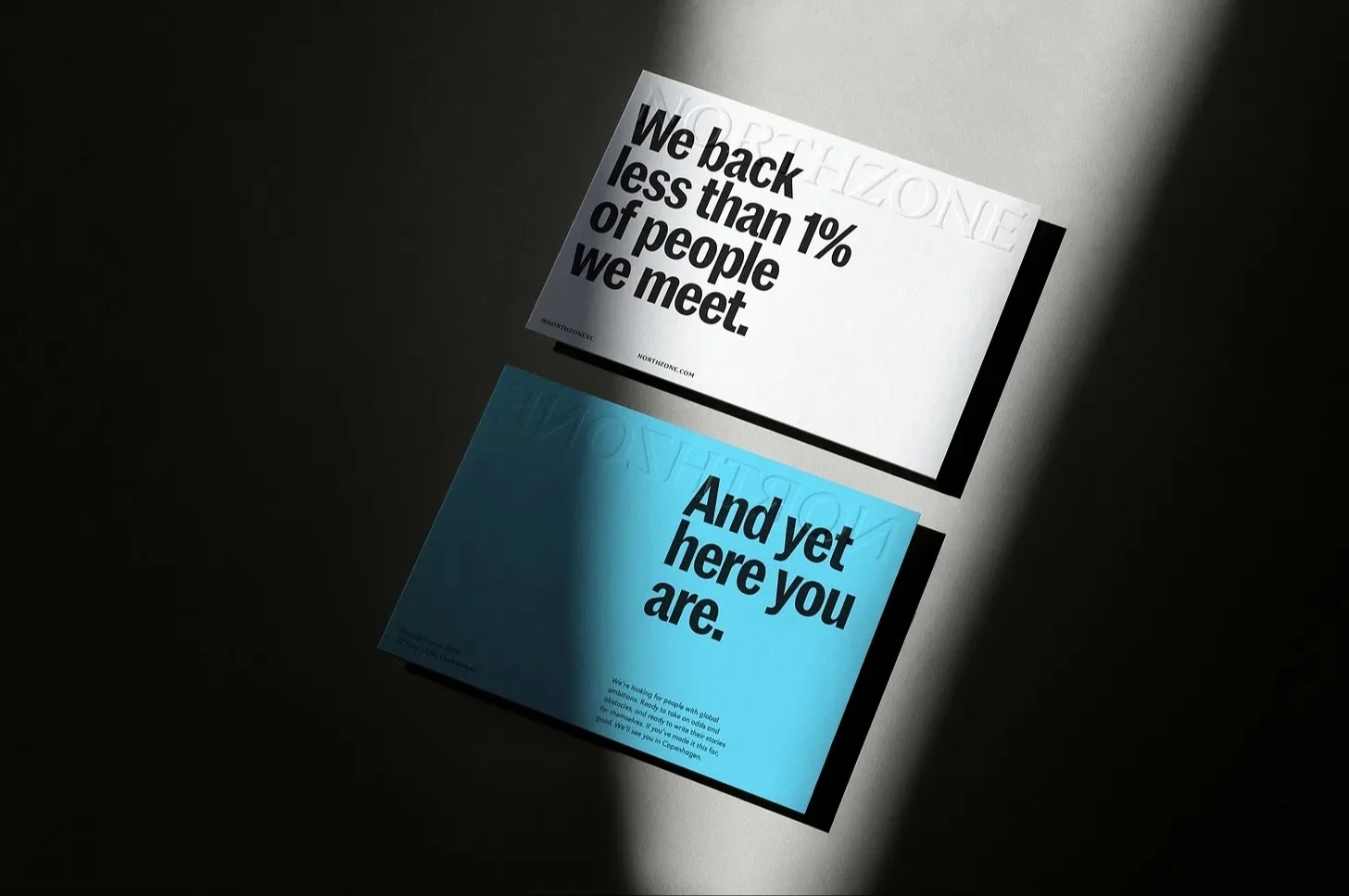
(Branding for Northzone by BP&O. Image source: [BP&O](https://bpando.org/2020/05/22/branding-northzone/))
End of empty talk and visibility at any cost
For a long time, it felt like visibility on the internet was a form of existence and credibility — for people and for businesses. The more you shared, the more intelligent, successful, risky (put here your adjective) you seemed.
In VC, the past couple of years felt like permanent broadcasting — posting on LinkedIn, on X, then on BlueSky, offering a take on every event and headline. From what I’ve seen, 2024-early 2025 was the peak time of that intense visibility.
Now, the rule “the more you share online, the more you exist” no longer holds, as Edelman points out. That kind of loud presence is even becoming, at times, slightly embarrassing, as Chris McCrudden, strategy director at Edelman, notes. What’s replacing it is a more deliberate approach to positioning.
Investors are starting to treat this seriously. They are becoming more intentional in how they communicate. Instead of constant posting or reposting, they hire communications professionals, create reports, launch newsletters, and work towards being featured in top-tier publications and print magazines. The depth of a message starts to matter more than frequency. What’s emerging is something closer to a “corporate approach”, which is about more structured and strategic brand-building.
At the same time, a big part of this shift is happening offline. “There is a hunger for real-world connection,” McCrudden says. But this is no longer about post-Covid obsession with large, crowded gatherings. It’s about selectiveness and intimacy: private dinners with limited spots, closed breakfasts, running, cycling, and skiing clubs, small curated circles.
Briefly, visibility stops being a reliable measure of relevance. Curated environments and saying something only when it is actually worth hearing — become the new baseline for communication.
Subscribe
Finance moves into culture, and brand narrative matters more
Investors are no longer just competing with other investors — they are competing with anyone who has money and an internet connection.
More people are starting to invest earlier, often in smaller, more casual ways. Lately, I’ve seen friends move into angel investing quite naturally — writing small checks through syndicates and accessing opportunities that would have been out of reach not long ago. For Gen Z, investing is already becoming part of how they engage with the world. What previously depended on networks and insider knowledge is becoming increasingly navigable for those willing to engage with it.
The State of LinkedIn@StateOfLinkedIn
HE PUT HIMSELF AS AN INVESTOR FOR EVERY STOCK HE OWNS 😭😭
3:43 PM · Aug 21, 2023 · 2.76M Views
226 Replies · 805 Reposts · 20.6K Likes
As a result of such accessibilty, as Edelman puts it, “finance has stepped out of the back pages of the newspaper and into popular culture, making it an ideal time for businesses to enter culture with stories about investment and wealth creation.”
In these circumstances, investing stops being purely a financial action — it starts to carry meaning. What you back increasingly reflects how you see the world and where you think it is going. For VCs, the narrative behind each deal becomes critical.
What I’m observing is that the funds that stand out consistently explain why they are writing checks to companies — what connects their decisions, what they believe is changing, and where they want to be positioned within that change.
In that sense, narrative is not anymore something built around the portfolio. As Petr Vitek from Tilia Impact Ventures put it, “In venture capital, you are what you fund.”
Not using AI for content creation becomes the differentiator
The economics of content look very different now — everyone can sound smart. Generative AI has flattened VC communication to the point where “sophisticated storytelling” is no longer a signal of real expertise. The result is saturation: polished language built on the same rhetorical patterns, often saying very little. As it usually happens, when everything sounds the same, nothing feels trustworthy.
Edelman’s report captures this “tipping point” clearly — as AI expands, a human fingerprint defines where the value is.
For VCs, as competing on communication volume no longer works, the question becomes: how do you make founders and LPs trust your fund? The answer points back to what’s already changing — thoughtful, carefully crafted positioning.
I heard this reflected in a small detail recently. One investor told me that while preparing written answers to my questions, he deliberately chose not to use AI. “I wanted it to be good, you know.” This speaks loudly and is so different from the AI obsession we still see, right?
Not because using AI is wrong, but because it’s becoming too noticeable and, in many cases, too similar — it blurs differentiation instead of creating it.
Out of curiosity, I asked ChatGPT to write a typical VC press release sentence. “We are thrilled to back an outstanding team building a category-defining solution in a rapidly evolving market.” You’ve definitely seen it somewhere, haven’t you?
But you definitely don’t remember which fund it was. And that’s exactly the point.
0 Comments