Star Wars Battlefront 2015
Battlefront 2015 wasn’t just a beautiful game. It was a masterclass in using technology to recreate the feeling of Star Wars

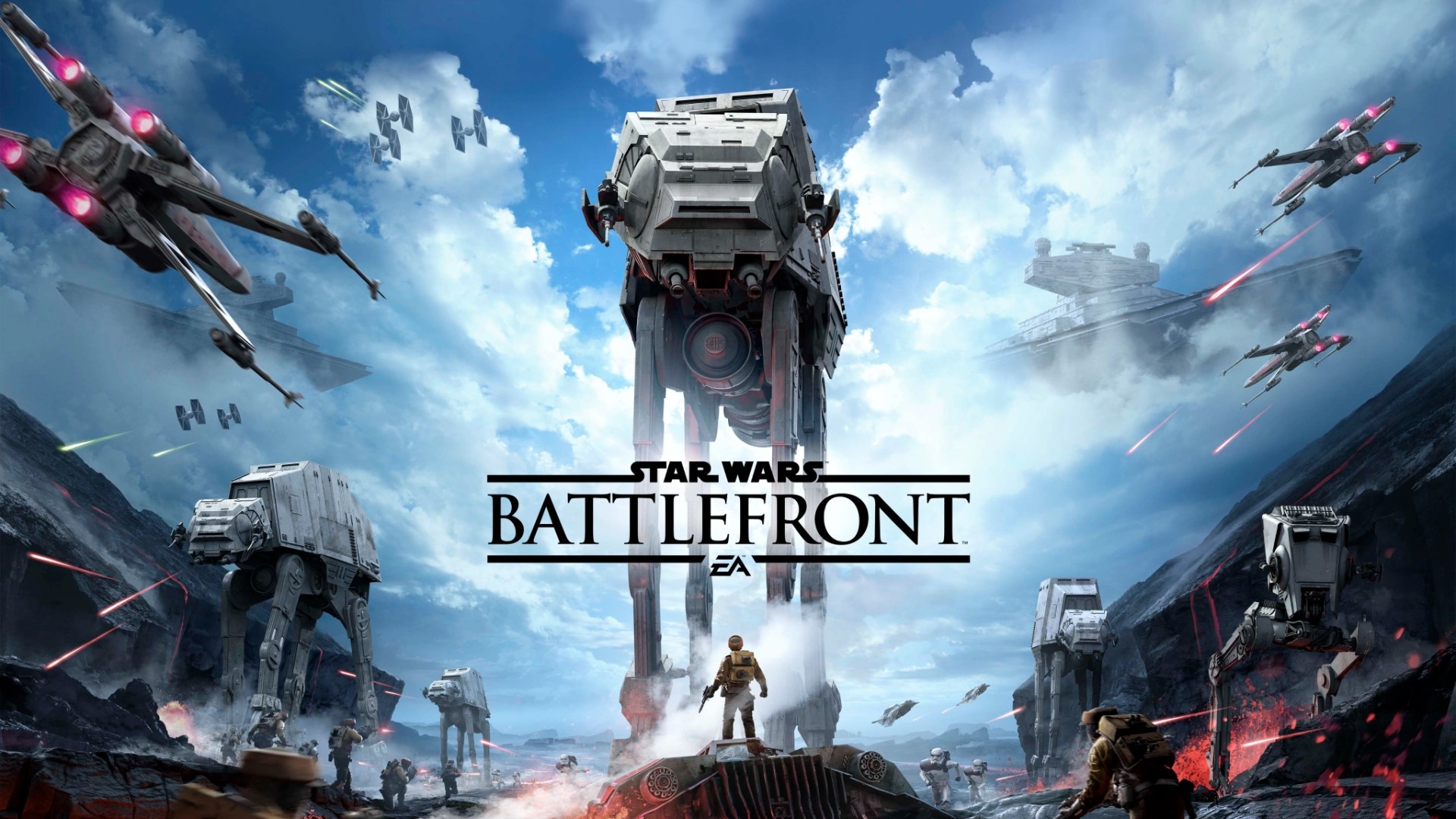
Some games age quickly.
Star Wars Battlefront, released in 2015 by DICE, somehow did the opposite. Almost a decade later, it still looks and sounds more convincing than many modern big-budget shooters.
Not because it had more content. In fact, Battlefront was criticized at launch for being light on modes and depth.
Its strength was somewhere else: atmosphere.
The game understood that Star Wars is not just lightsabers, stormtroopers, and spaceships. It is texture, sound, scale, light, dust, snow, forests, lasers, metal, and the feeling that a fictional world has physical weight.
Battlefront was ahead of its time because DICE did not simply build a Star Wars shooter.
They tried to recreate the memory of Star Wars.
What happened
When DICE built Battlefront, the studio leaned heavily on photogrammetry - a process where real objects and locations are photographed from many angles and turned into detailed 3D assets.
For Battlefront, this mattered because DICE had access to real Star Wars reference material. The team scanned props, costumes, helmets, weapons, and even used real filming locations as visual foundations for the game. Frostbite’s official GDC description says DICE used photogrammetry from pre-production to launch to create the world of Star Wars.
GDC2016-Brown-2
Wired reported that DICE used photogrammetry to capture original props from multiple angles and build highly accurate 3D replicas. Some objects were easy to scan because they had soft, textured surfaces. Others, like Darth Vader’s helmet, were harder because shiny surfaces do not photograph well and needed digital cleanup.
That detail explains why Battlefront still holds up visually.
The game was not just “high resolution for 2015.” It was built from real surfaces. The armor had material memory. The forests felt dense. The snow on Hoth felt physical. The ships looked like they came from the same visual universe as the films.
What people are missing
Most discussions about game graphics focus on raw technology: resolution, ray tracing, texture quality, frame rate, polygon count.
Battlefront shows that visual realism is not only about technical power.
It is about art direction plus constraint.
DICE had a clear target: make the player feel like they were inside the original trilogy. That goal shaped everything. The colors, lighting, surfaces, explosions, animations, and camera language all had to match the emotional memory of Star Wars.
This is why Battlefront can still look better than newer games with more advanced rendering features.
A technically superior game can still feel fake if its world lacks coherence. Battlefront feels real because its assets, lighting, sound, and environments are all working toward the same fantasy.
The game’s visual design was not trying to impress you with complexity.
It was trying to disappear.
Our take
The real genius of Battlefront was that DICE treated authenticity as a technical problem.
Photogrammetry gave the game a physical base. Frostbite gave it lighting, scale, and performance. The art team gave it restraint. And the audio team completed the illusion.
The sound design may be just as important as the graphics.
The Verge wrote that DICE’s audio team did not simply reuse a library of Star Wars sounds. They studied the original methods behind the films’ iconic sound effects and tried to recreate that retro-futuristic feeling for an interactive game.
That is why the game’s battles feel so cinematic.
A blaster shot does not sound like a generic sci-fi laser. A thermal imploder does not sound like a normal grenade. A TIE fighter passing overhead has the exact kind of aggressive, screaming presence that makes the player look up even before they understand what is happening.
Sound makes the world believable before the brain has time to analyze the image.
This is one reason Battlefront still feels modern. It was not only rendering Star Wars.
It was performing Star Wars.
Why it matters for builders
Battlefront is a useful case study because it shows that technology is strongest when it serves a very specific emotional target.
DICE was not just asking, “How do we make this look good?”
They were asking, “How do we make this feel like Star Wars?”
That is a much better product question.
For builders, the lesson goes beyond games. Great products are not only feature lists. They are systems that create a feeling. The interface, performance, visuals, sound, timing, and details all have to point in the same direction.
Battlefront did not become memorable because it had the most content.
It became memorable because it understood the world it was trying to build.
The result is strange: a 2015 game that, in some ways, still feels like it came from the future.
Maybe that is why fans still want the next version so badly.
#Battlefront3
3 Comments