Google's Convergence
Google I/O 2026 had a hundred announcements. The most important one was a sentence Sundar Pichai dropped quietly. Search, Gemini, and AI agents are going to become the same product.

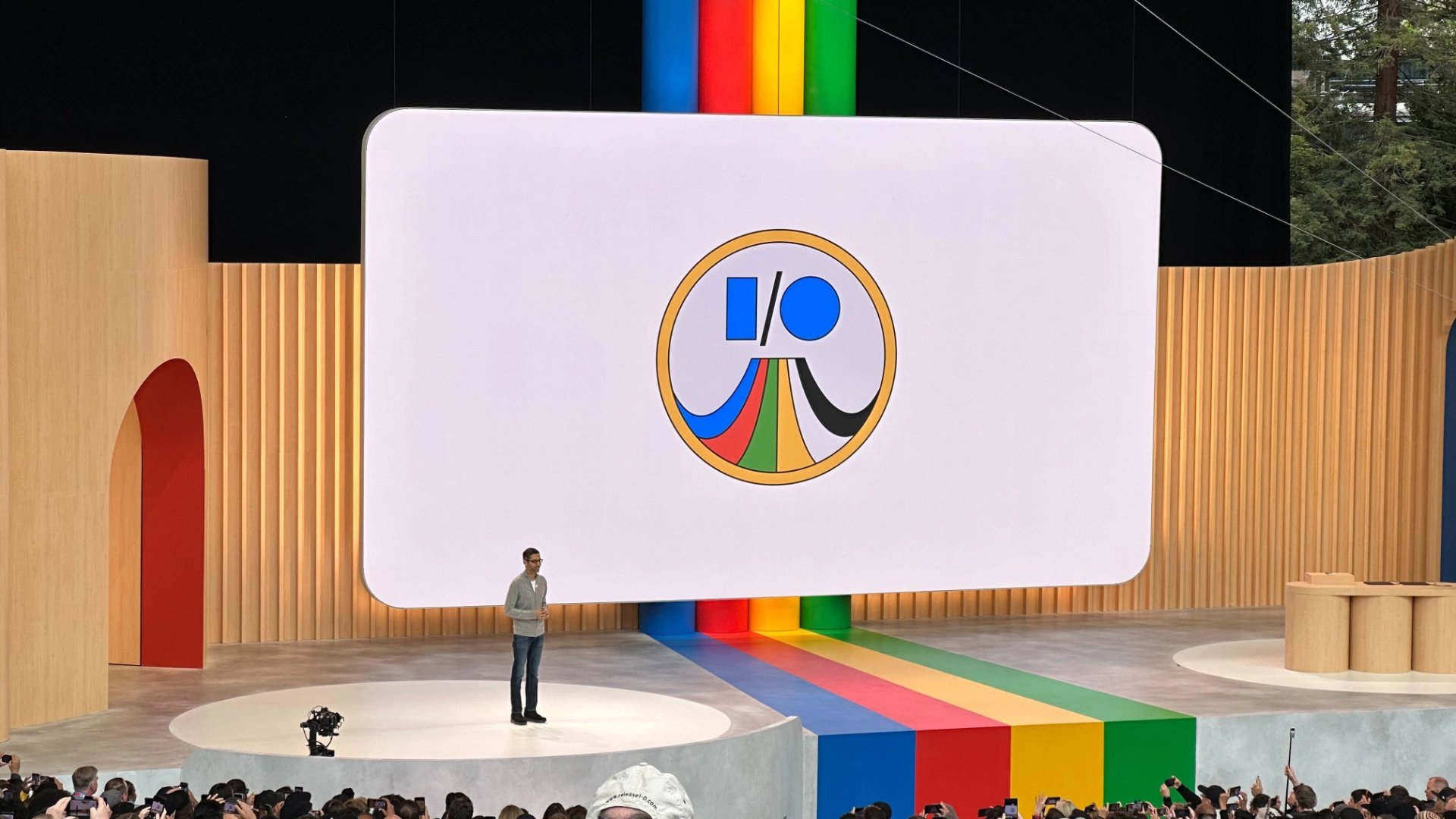
On May 20, 2026, Sundar Pichai opened the Google I/O developer conference with the kind of keynote Google has been refining for two decades. There were product reveals. There were live demos. There were partnerships with Samsung, Gentle Monster, and Warby Parker. There were one hundred specific announcements, listed and counted, in a blog post the next day.
Buried inside the noise was a sentence. Pichai said that Google's search box, Gemini app, and AI agents would eventually become the same thing.
Most of the audience clapped politely and moved on. The sentence was the entire conference.
The traditional Google product
For twenty-five years, Google has been a search engine. The product is conceptually simple. You type a question. Google returns a ranked list of links. The advertising slots above and beside those links produce nearly two hundred billion dollars in annual revenue and have funded everything else the company does, including Android, Maps, YouTube, Gmail, Workspace, Pixel, and Waymo.
The search engine is not just a product. It is the moat. It is the cash flow that makes everything else possible. It is the reason Google can build foundation models, autonomous cars, and quantum chips without going to the public markets for capital. The entire structure of the company sits on top of one specific habit: typing something into a box and getting back a list.
Pichai just announced that habit is going away.
What the I/O announcements actually were
Read in isolation, the I/O 2026 reveals look like incremental updates. Gemini 3.5 Flash is faster and cheaper. Gemini Omni can generate video from any input. Google Spark is a proactive agent that lives in the cloud and works on tasks without being asked. Search agents will run background research on topics you care about, twenty-four hours a day, and report back when something changes. Docs Live lets you talk to Gemini through your documents. Intelligent Eyewear, launching this fall, lets you ask Gemini to order a coffee on DoorDash by tapping the side of your glasses.
Read together, they describe a system that does not need a search box. The user is no longer the active party. The agent is. You do not type. You assign. The Gemini layer running across Search, Workspace, Android, and glasses figures out what you need, when, and how to deliver it.
This is what Pichai means by convergence. The historical Google product, the search box, is being absorbed into a larger product that does not look anything like a search engine.
The strategic risk
Google is doing this on purpose, and it is the most dangerous thing the company has done in twenty years.
The current product makes money in a very specific way. Users type queries. Google shows ads. Advertisers pay for clicks. The structure is simple, observable, and enormous. Every part of it has been optimized for two decades.
The new product, the agent layer, has no equivalent advertising model yet. When Gemini answers a question directly, there is no list of links to put ads next to. When an agent completes a task on your behalf, there is no impression to sell. When you ask your glasses to order coffee, the advertiser is not in the loop in any way that resembles a search auction.
OpenAI and Anthropic do not have this problem. They make money by charging for the model itself. Their incentives are aligned with replacing search. Google's incentives, until very recently, were aligned with defending it.
The I/O 2026 keynote was Google publicly choosing replacement over defense. The new product will be better than the old one. It will also cannibalize the highest-margin business in the company's history, and the new revenue model has not been invented yet.
The longer game
This is the move you make when the alternative is worse. If Google does not converge Search, Gemini, and agents into a single product, someone else will. OpenAI has been edging toward an agent-first interface. Anthropic has been pushing Claude into long-running tasks. Perplexity, in its own scrappy way, has already replaced search for a meaningful slice of power users.
Google has the user base, the distribution, and the data. It does not have time. Pichai's quiet sentence was an acknowledgement that the traditional product cannot survive in its current form, and that the company is willing to torch the moat to build the next one.
That is the only honest read of Google I/O 2026. The hundred announcements were detail. The one announcement that matters is that Google has decided to stop being a search engine.
The rest of the decade is about whether they can become whatever comes next.
Google I/O 2026 was held May 20-21 at the Shoreline Amphitheatre in Mountain View. Sundar Pichai has been CEO of Google since 2015 and Alphabet since 2019.
2 comments