Europe's Default Audi
The A3 was the best-selling Audi in Europe last year. It invented the premium compact segment in 1996, and the formula still beats everything built to replace it.

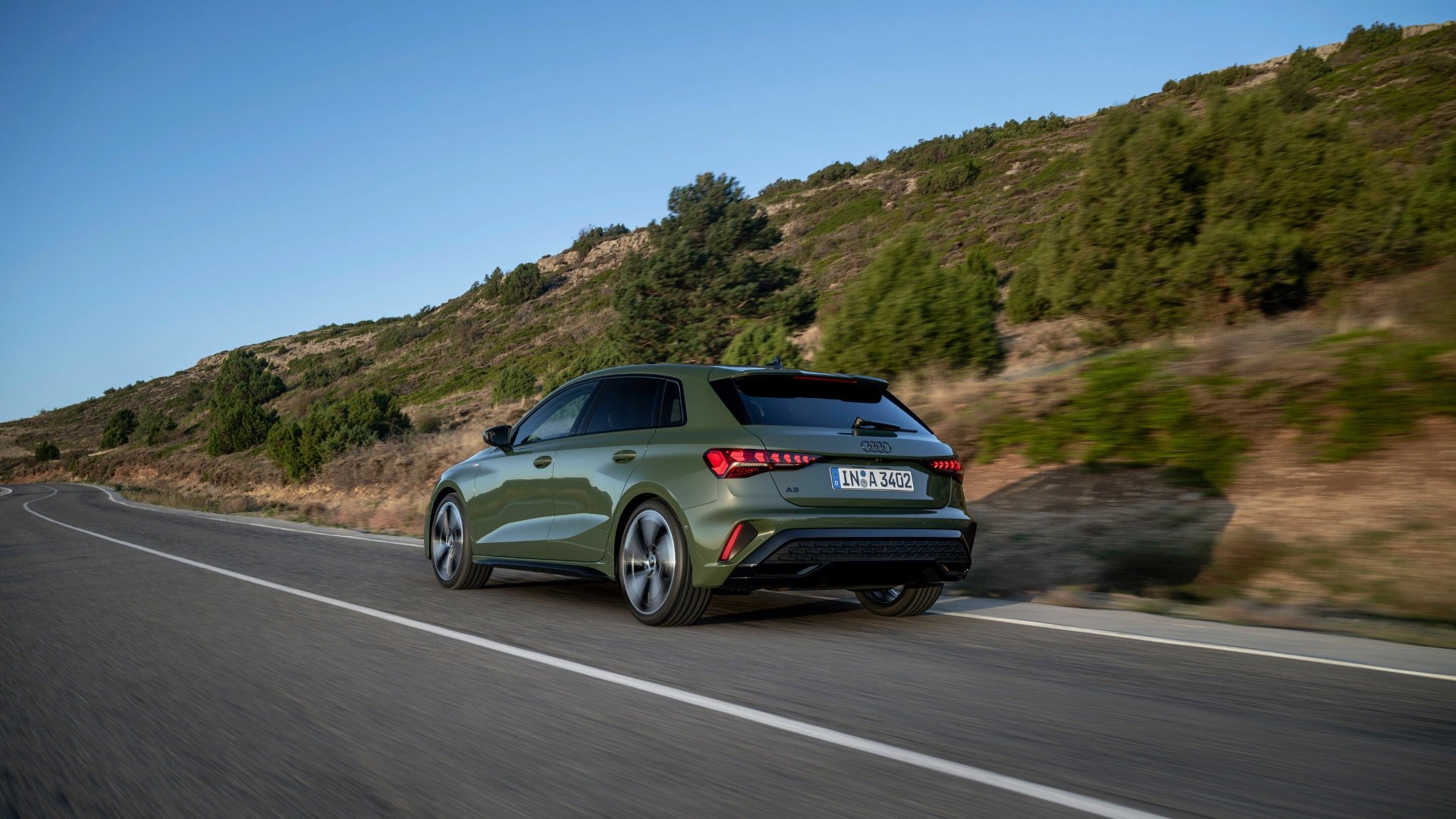
In 2024, Audi sold roughly eighty-four thousand A3 hatchbacks across Europe. That was more than any other Audi model, more than the Q3, more than the Q5, more than the entire electric Q4 lineup. In a year when most German automakers struggled, the smallest car in Audi's main lineup quietly remained the company's most popular product.
This is not new. The A3 has been the European compact-premium default for almost three decades. To understand why, you have to go back to 1996.
The car that invented a segment
When Audi launched the original A3 in September 1996, the idea of a small premium car barely existed. Mercedes and BMW built sedans. Volkswagen built the Golf. The category of "small but expensive" was not a category. Buyers who wanted prestige bought a bigger car. Buyers who wanted a small car accepted that it would feel cheap inside.
The A3 was the first vehicle to deny that trade-off. It used the same platform as the Volkswagen Golf, but the interior, the materials, the badge, and the driving experience were positioned a level above. The pitch to the buyer was simple. You can have a Golf-sized car with a premium feel, and the company that built the Quattro will engineer it for you.
The Sportback, the five-door hatchback version, arrived in 1999. It is the body style that has dominated A3 sales ever since.
The size matches the continent
European cities were not designed for cars. The streets in central Paris, Milan, Munich, and Madrid are narrow, the parking spaces are small, and the speed cameras are everywhere. A car that is too large becomes a daily inconvenience. The wider the car, the harder it is to park, navigate, and maneuver through medieval city centers that have existed for longer than the internal combustion engine.
The A3 Sportback is slightly over four meters long. This makes it small enough to fit into the parking spaces designed for cars half its price, but large enough to carry four adults and a week of groceries. The hatchback opening adds practical cargo room without the visual bulk of a station wagon. In American terms it would be a small car. In European terms it is exactly the right size for the way people actually live.
The interior earns the badge
Premium-segment cars survive or die on interior quality. Buyers spend most of their time inside the car, not looking at it from the outside. The A3 understood this from the beginning and has refined the principle for nearly thirty years.
The current model uses soft plastics where competitors use hard ones. The dashboard is leather-wrapped at trim levels where Volkswagen still uses textured plastic. The infotainment screen sits flush with the trim rather than perched awkwardly above it. The switchgear has the weight and detent typical of cars that cost twice as much.
This is the part that justifies the badge. A buyer comparing an A3 to a Golf will find the Audi nicer to sit in, nicer to touch, and quieter at speed, even though both cars share most of their mechanical hardware. The premium tax buys experience, not engineering.
Cheaper than the rivals it beats
The A3's most underrated advantage is price. Audi has consistently priced the A3 just below the equivalent BMW 1 Series and Mercedes A-Class. The savings are small in absolute terms, but they exist on a car that drives at least as well as either rival.
Reviewers describe it as the best all-rounder of the three. The BMW 1 Series is sharper in corners. The Mercedes A-Class is softer over bumps. The A3 sits in the middle. It is less specialized than either of its rivals, which means it does fewer things badly and more things well. For a car that will be driven daily, on commutes and errands and weekend trips, the all-rounder is usually the right choice.
A range that covers everything
The same car comes in dramatically different configurations. The base Technik trim is sensible, fuel-efficient, and inexpensive enough to be a reasonable company-car choice. The S3 is a serious performance hatchback. The RS3 is a fully unhinged four hundred horsepower compact that costs more than most luxury sedans and runs zero to sixty in under four seconds.
This range is part of the appeal. A young professional can buy an entry-level A3 as a first premium car and grow into the platform. A car enthusiast can buy an RS3 and have one of the fastest hatchbacks on the road. The same showroom serves both. The Audi badge follows the buyer through different stages of life without forcing them to switch brands.
The default
European premium buyers have more choice now than they did in 1996. There are crossovers, electric hatchbacks, plug-in hybrids, and a long list of new entrants from Chinese and Korean brands. The A3 keeps winning because the original premise still holds. People in Europe still want a small premium car. The A3 is still the most balanced version of one available.
A category has many founders. It usually has one default. In premium compact hatchbacks across Europe, the default is the A3.
The Audi A3 has been in continuous production since 1996. The current fourth generation launched in 2020 and received a mid-life facelift in 2024.
5 comments